



How Global Tension Impacts Domestic Freight Costs
Learn how Middle East tensions and the Strait of Hormuz are driving higher fuel and domestic freight costs, and how NTG helps shippers stay flexible and prepared.

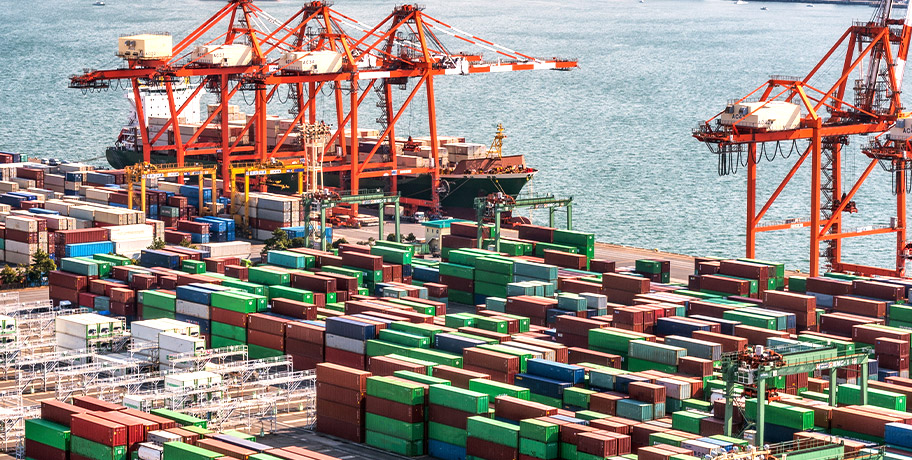
The conflict in the Middle East is no longer just a headline. With rising tensions involving Iran and growing instability around the Strait of Hormuz, shippers are starting to feel real pressure on fuel, capacity and domestic freight costs.
Even if every load you move is inside the United States, your network is still connected to that same global system. The question is less “Will this affect me?” and more “Where will it show up first and what can I do about it?”
NTG sits in the middle of thousands of daily loads across modes and markets. Here is how we see global tension moving into U.S. domestic freight and how a transportation partner can help you manage through it.
Choke Points, Detours and Domestic Disruption
When a choke point like the Strait of Hormuz is under stress, a few patterns tend to appear in domestic transportation:
- Fuel costs climb
Crude oil volatility quickly works its way into diesel and gasoline. After recent strikes on Iran and delays around the Strait of Hormuz, global oil benchmarks jumped and diesel futures spiked even more than crude, signaling higher fuel costs ahead for carriers, as detailed in this analysis of fuel price jumps tied to Hormuz delays. - Port and inland flows change
If ocean carriers reroute ships or slow services, different U.S. ports and inland ramps see different volumes at different times. That can tighten drayage, spike demand for trucks in certain markets and put pressure on linehaul rates out of those areas. - Capacity pockets tighten
Markets linked to new or stressed flows often see more tender rejections, more spot activity and higher all-in rates. On a routing guide, that looks like more “misses” and more loads covered in the spot market at higher prices. - Inventory and expedites increase
Longer or less predictable lead times usually mean higher safety stock at DCs and more last-minute recoveries when forecasts miss. Those recoveries often show up as premium domestic moves, which further raise total transportation spend.
You cannot control what happens at the Strait of Hormuz, but you can control how quickly you see its impact and how many options you have when it touches your lanes.
How Oil Prices Flow into Domestic Freight Costs
You do not need to be an energy trader to understand the basics of how oil hits your transportation P&L.
When oil prices jump, refined fuel prices follow:
- Wholesale diesel and gasoline futures usually move even faster than crude in a disruption. During the recent Hormuz situation, gas and diesel futures on major exchanges spiked much more than Brent crude as tanker traffic slowed and war risk concerns grew.
- U.S. retail prices then adjust. Recent fuel market reporting shows gasoline and diesel moving higher in the days following the attacks and shipping delays, with gasoline around $3.00 and diesel above $3.75 per gallon.
A useful way to frame the speed of this move is to look at the very start of the crisis window. On February 28, the price per barrel of Brent crude closed at $72.87, and on March 2 it had risen nearly 7% to close at $77.74 after an intraday trading high of $82. That is a meaningful change in a very short window, and as this discussion of new price pressures from the Iran conflict points out, it comes at a moment when broader inflation had just begun to ease. If tension in the region remains high for an extended period or escalates further, the price per barrel could increase significantly, putting even more upward pressure on fuel and, by extension, domestic freight costs.
Analysts often note that crude makes up roughly half of the retail price of fuel, so sharp moves in oil tend to pull diesel and gasoline up quickly.
For carriers, fuel is one of the largest line items. When diesel rises:
- Operating costs increase across truckload, LTL, parcel, intermodal and drayage.
- Fuel surcharges adjust up via contract tables tied to diesel indexes. Even if base linehaul rates stay unchanged, the all-in rate per mile rises.
Because of that, a short, sharp movement in fuel can quickly translate into higher domestic freight costs for shippers, particularly on long haul and heavy lanes.
How a Transportation Partner Adds Value
When conditions are changing fast, a strong partner does three things particularly well: read the market, create options and test your plan.
Turn Market Noise into Useful Freight Intelligence
Headlines tell you the “what.” The freight market tells you the “so what.”
A transportation partner that is in the market all day can help you answer:
- Where are fuel and linehaul actually moving on our core domestic lanes?
- Which origin and destination markets are seeing early signs of tightening or new surcharges?
- Where are contracts still working well and where do we need a different approach?
At NTG, we roll this into simple views by lane and region so you can see, in plain language, how current conditions are affecting your domestic freight costs instead of guessing.
Use Carrier Reach to Create Real Options
When the pattern of freight changes, reach matters.
Working with a wide range of carriers and modes makes it easier to:
- Tap into different carrier types quickly, from large nationals to strong regional and niche providers
- Explore intermodal, consolidation or other solutions when long haul truckload becomes less efficient under higher fuel
- Stand up or adjust drayage and inland routings as your port mix and domestic volumes shift
You own your network strategy. A partner’s job is to make it easier to execute that strategy with the right carriers under new conditions.
Stress Test Domestic Freight Costs Together
When things feel uncertain, it helps to replace “we think” with “we ran the numbers.”
Working together, you can quickly:
- Test what different diesel levels do to cost per mile and all-in costs on your top domestic lanes
- Identify which lanes, customers or DCs are most sensitive to changes in fuel and capacity
- Define simple rules of thumb for when to lean on contract, when to use spot and when to consider mode shifts
NTG brings live quote and coverage data. You bring your priorities and risk tolerance. The result is a clearer view of where you are exposed and what levers you can pull.
How to Get the Most from a Transportation Partner
In moments like this, the shippers who get the most value from a partner tend to do a few things consistently:
- Be clear about what must not break
Share which lanes, customers and service levels are non-negotiable and where you have room to flex on mode or timing.
- Ask targeted questions
Instead of “How is the market?” ask:- “What are you seeing on the lanes tied to these ports?”
- “Where are fuel and linehaul moving the most in our network?”
- “Which markets look like good candidates for intermodal or consolidation?”
- Invite early signals, not just reports
Ask your partner to surface when:- Tender rejections start to climb on key lanes
- New surcharges appear in specific regions
- The gap between spot and contract changes in ways that matter for you
- Pilot changes, then scale
Try routing or mode adjustments on a handful of lanes first. Learn from those tests, then expand what works.
This is the kind of rhythm we aim for with NTG customers when the market is moving. The goal is not to react to every headline. It is to stay tuned into real time domestic freight costs and capacity and make thoughtful adjustments as needed.
What a Partner Can Do for Domestic Freight Costs
No transportation partner can control oil prices or dictate how ships move through the Strait of Hormuz. Those factors sit outside any single company’s reach.
What a partner can do is:
- Show you how those forces are starting to affect your domestic lanes and freight costs
- Bring new options in carriers, modes and routings when your usual paths are under pressure
- Help you move from “we are hearing about this” to “here is how we are managing it”
In a world where global events can move markets quickly, that combination of market visibility and execution support is what makes a partner useful.
As the situation in the Middle East develops, NTG will keep watching the data, listening to carriers and shippers, and translating that into practical steps that help you protect domestic service and spend as much as the environment allows.
Michael is the President & Chief Commercial Officer at NTG, where he brings three decades of experience driving growth across complex, fast-moving businesses. With a track record of scaling businesses and leading transformation efforts at companies like Amazon, UPS and Ascend, Michael focuses on building durable customer relationships, developing talent and driving operational efficiency through smart process design and the strategic use of technology.


On this page:
Subscribe to our Newsletter